How to use fluorescent whitening agents in the paper industry:
Whitening paper toning
The color matching of whitened paper is the mixed use of fluorescent whitening agents and dyes, or compound synergy. The visual whiteness of paper not only depends on the brightness of the paper, but also the hue (color light) of the paper plays a big role, which is mainly related to people's preference for different hues. Under the same brightness, purple-white or blue-white paper is much brighter than yellow-toned paper. Therefore, in the paper production process, especially the production process of high-end cultural paper, it is often necessary to add a small amount of dye. The paper is color-adjusted to produce paper with high whiteness, bright, soft, and deep color that is acceptable to users to meet people's requirements for different whiteness and tones of paper. Usually purple-white and blue-white are the main directions for color adjustment.
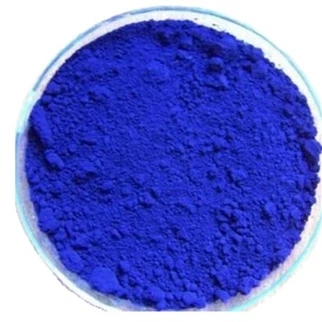
Paper coloring mainly uses water-soluble synthetic dyes, but dispersed and water-soluble colored pigments can also be used. Dyes commonly used for paper coloring include: pigment dyes, acid dyes, basic dyes and direct dyes. Among them, blue and purple direct dyes and pigment dyes have the best effect and are the most widely used. The coloring method mainly adopts in-slurry coloring, that is, the dye is dissolved in water and then added to the pulp for use; it can also be used to color the paper surface, that is, the paper page is dip dyed, calendered or coated. Dyes are usually added after the optical brightener.
Use dyes to tint white paper. The amount of dye used depends on the base whiteness of the bleached pulp and the color light of the optical brightener.
Direct dyes and pigments are recommended for in-slurry coloring. To ensure even distribution and optimal quality, the pigment slurry should be added to the raw material suspension at the beginning of the beating process. Pigment paste is suitable for high-quality paper, has good light fastness, and is more suitable for lithographic printing, letterpress printing and writing paper, especially high-speed printing machines.
Basic and acidic dyes are still used, but usually in low concentration in the beater and their brightness no longer meets the requirements of ever-increasing standards. Acid dyes can be used in small amounts on wood printing papers with a high filler content.
The characteristics of dyes (including fluorescent whitening agents) should be fully understood and the dye solution prepared. After selecting a good dye variety, its dissolution, dilution and filtration are very important to achieve good color mixing results. This point is often overlooked in actual work. It is best to use water with low hardness or condensed water when dissolving and diluting dye. For liquid dyes, it is generally necessary to prepare an aqueous solution with a concentration of less than 10% before use, and it is best to prepare it immediately. For powdery dyes, pay attention to the dissolving temperature and stir thoroughly. The dissolving temperature should not be too high, otherwise it will cause dye of decomposition. Direct dyes generally do not exceed 85 to 90. In addition, the dye needs to be filtered before being put into the slurry. Generally, two layers of 23. 8 mesh/cm (60 mesh) sieves are used to screen out the undissolved part, and then the dye is diluted to a concentration of less than 10g/L. (Generally 5g/L) dye solution is available for later use.
When adding dye, in addition to fully dissolving or dispersing the dye, attention should also be paid to mixing it with other auxiliary materials
The order of adding materials, especially aluminum sulfate, and the time interval between each auxiliary material (at least 10
20min). For in-slurry color mixing, when using a single dye, the general sequence is: fluorescent whitening agent → dye → glue → aluminum sulfate → talc.
If two or more dyes are used for color mixing, it should be noted that basic dyes, acid dyes or direct dyes cannot be added to the pulp at the same time, otherwise agglomeration or even precipitation will occur between the dyes.
When using multiple dyes at the same time, the following sequence can generally be used:
(1) Basic dyes and acid dyes are used together. After adding aluminum sulfate to the pulp, acid dyes are added first, and then basic dyes are added.
(2) Direct dyes are used with basic dyes. Direct dyes are added first after adding size to the pulp, while basic dyes must be added after aluminum sulfate is added.
(3) Direct dyes are used with acid dyes. Can be dissolved together and added to the pulp after adding the size.
(4) If three dyes are used. Direct dyes and acid dyes can be dissolved together and added after the pulp is added to the size; basic dyes must be added after aluminum sulfate is added.
By using different fluorescent whitening agents, purple dyes and blue dyes in appropriate amounts, various shades of white that people need can be obtained. Increasing the amount of dye will reduce the brightness of the paper, so the amount of dye should be controlled to a minimum. Usually adding a small amount of dye can achieve the best results, which also means the lowest cost consumption.
Although whitened paper tinted with dyes reduces brightness to a certain extent, it also appears whiter to the human eye when the ultraviolet light content is relatively low. Whitened paper that does not contain tinted dyes has a lower ultraviolet light content. How much has a greater impact on its whiteness.
Color mixing example 1:
Mix two dyes to produce white offset paper.
(1) Pulp and ratio:
bleached kraft hardwood pulp (ISO brightness is 89%):
bleached kraft softwood pulp (ISO brightness is 89%) = 70: 30;
Quantity: 120g/m2;
Cationic starch: 1%; AKD: 0.12%;
Filler: 20% (ISO brightness 84%);
Retention aid: 0. 07% CPAM + 0. 3% bentonite;
Pigment-type dyes: blue pigment Irgalite Blue RL 30 ~ 60g/t paper, purple pigment Irgalite Violet M 50 ~ 100g/t paper; or use liquid violet dye produced by Ciba Specialty Chemicals Company 100 ~ 200mg/L (original solution) And liquid blue 100 ~ 200mg/L (original solution);
Fluorescent whitening agent: Tinopal ABP liq. 0. 3% ~ 0. 5% (on dry pulp weight).
(2) Process flow:
Pulp → Fluorescent whitening agent → Cationic starch → AKD → Purple dye → Blue dye → Filler → Retention aid (CPAM) → Retention aid (bentonite) → Papermaking → Drying → Finished product
Note: The addition of various additives should be done at a certain interval and stirred thoroughly. The dye is added at the inlet pipe of the pulp pump.
For the production of general cultural paper, use Violet M: Blue RL = 2: 1 (CIBA), Violet ET 6140: Blue 3IL = 1: 1 (DyStar), Violet Brw: Blue BT =2: 1 (DyStar), Violet 5BFN or Violet 5BFN: Blue 3RF = 2 : 1 (Clariant) can adjust the ideal color light.
Color mixing example 2:
Dye color mixing to produce white writing paper.
(1) Slurry ratio:
Homemade bleached wood pulp: Homemade bleached mango pulp = 60: 40; Homemade bleached mango pulp 100%;
Production machine: 1575 double-cylinder double-wire rotary screen paper machine; Production varieties: 60g/m2 writing paper;
Fluorescent whitening agent: Tinopal APC liq. 0. 22% (to absolute dry pulp weight); dye: appropriate amount.
(2) Process flow:
Slurry → Tinopal APC liq. → Dye → Rosin → Aluminum sulfate → Filler → Papermaking
Production situation: Using fluorescent whitening agent and dye, 22t of writing paper is produced. The original pulp whiteness is 73.18% on average. After whitening, the average whiteness is 81.68%, an average increase of 8.5%.